
Mataji, Mountains and Maggi, Dainkund
Dainkund. Temples of Himachal… 6.
There are several temples in Himachal on hilltops. Although they are neither grand nor popular, the location makes up for it.
Dainkund is one such temple. At about 9000 feet height, it is near Dalhousie, itself lesser visited than Dharamshala or Shimla. It is a nice family hike, not too strenuous for anyone; It offers a 180 degree plus view of Himalayas, if you are blessed with a clear day.
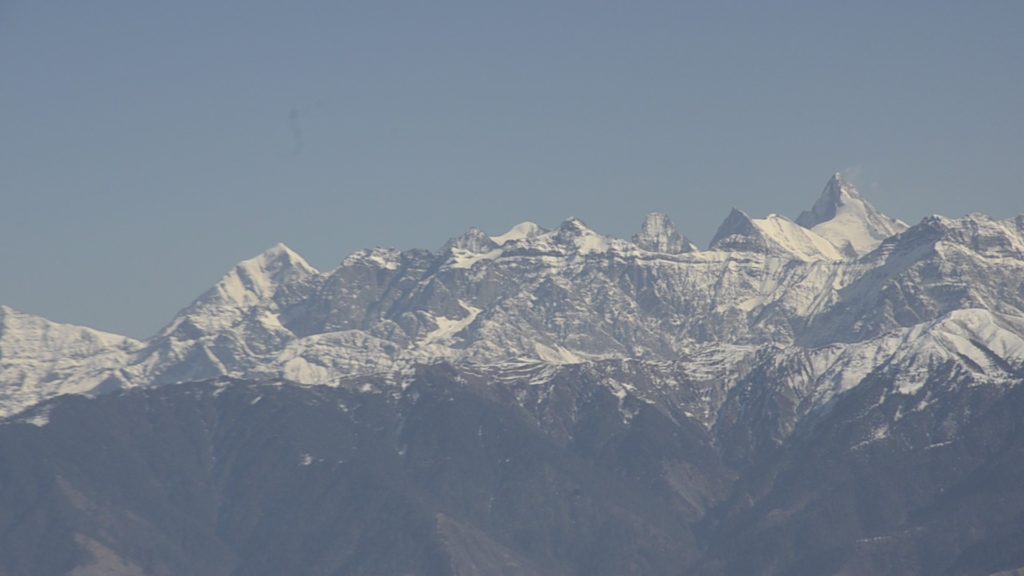
180 degree plus views from Dainkund
Dainkund is a hilltop drive from Dalhousie till a fork, after which the road is controlled by armed forces. My guess is a radar station and missile defence. That makes it a perfect location for the Himalayan vista too.
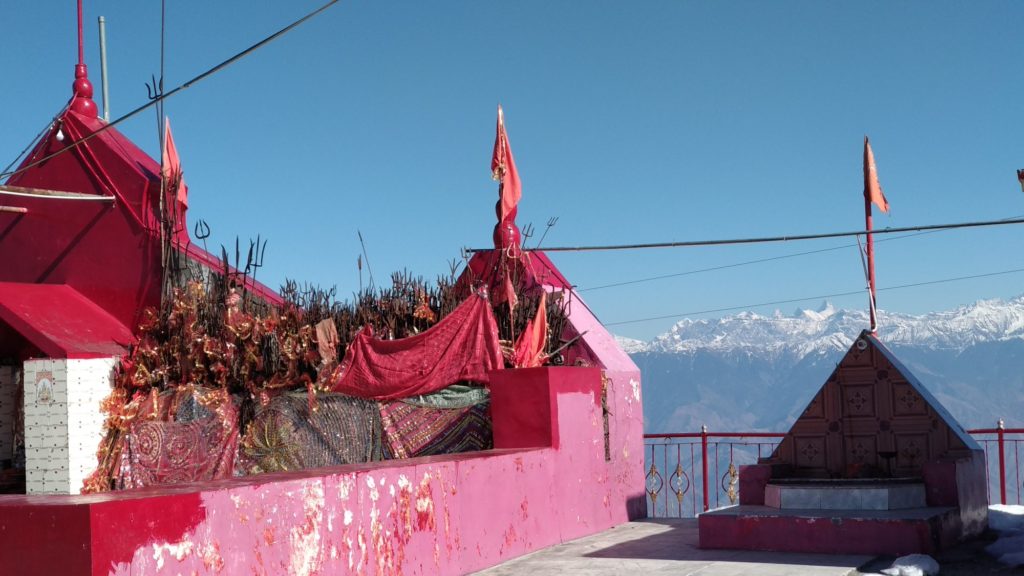
Each morning a defence vehicle comes down the hills and clears the start of civilian traffic. It is a snaking drive up to another spot where all traffic is stopped. Then you start walking: a sharp climb to a ridge and then walk on a narrow ridge top. It snows heavily and the repeated tourist flow melts and hardens the snow making it slippery to walk. After about 45 minutes or so, you reach the temple. Like most of the traditions of Himachal, this is a Devi temple, for Phaloni Devi.
Dainkund gives you early snow, a short family hike, a great snowcap view, ridgewalk, and picture book maggi.
Mataji, Mountains and Maggi at, Dainkund, Dalhousie, Himachal
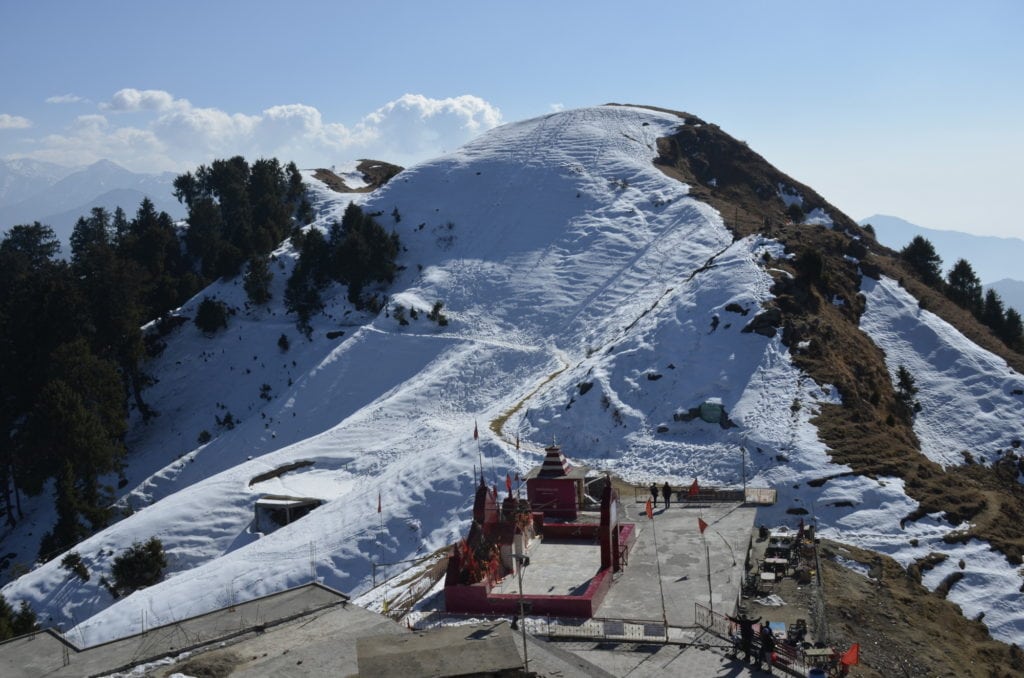
The lightest of new year snow at Dainkund
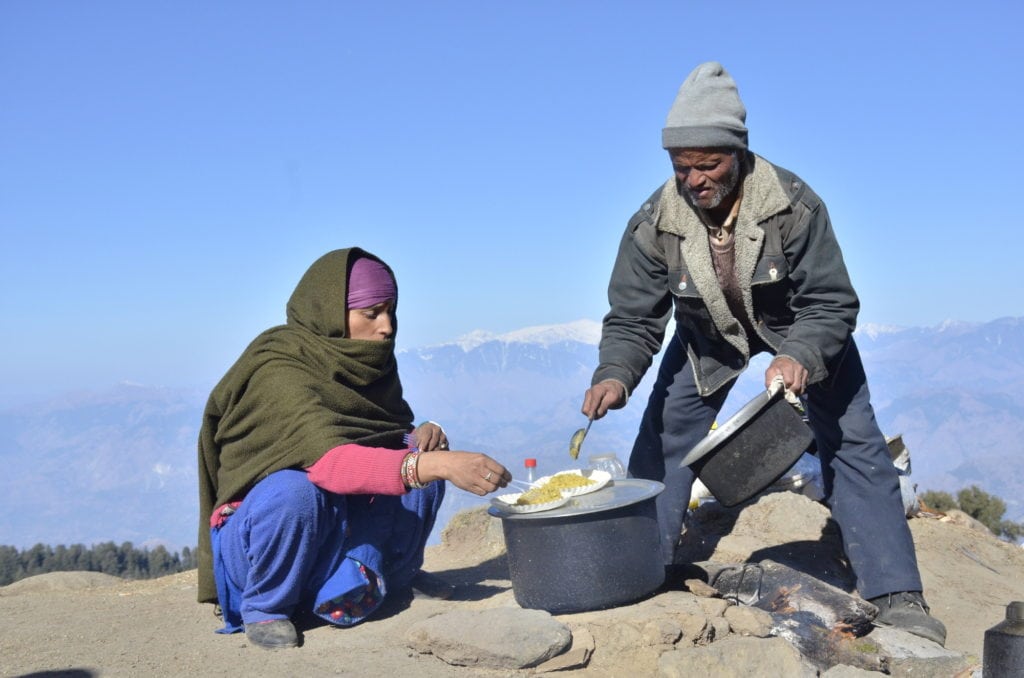
Maggi is made for mountains
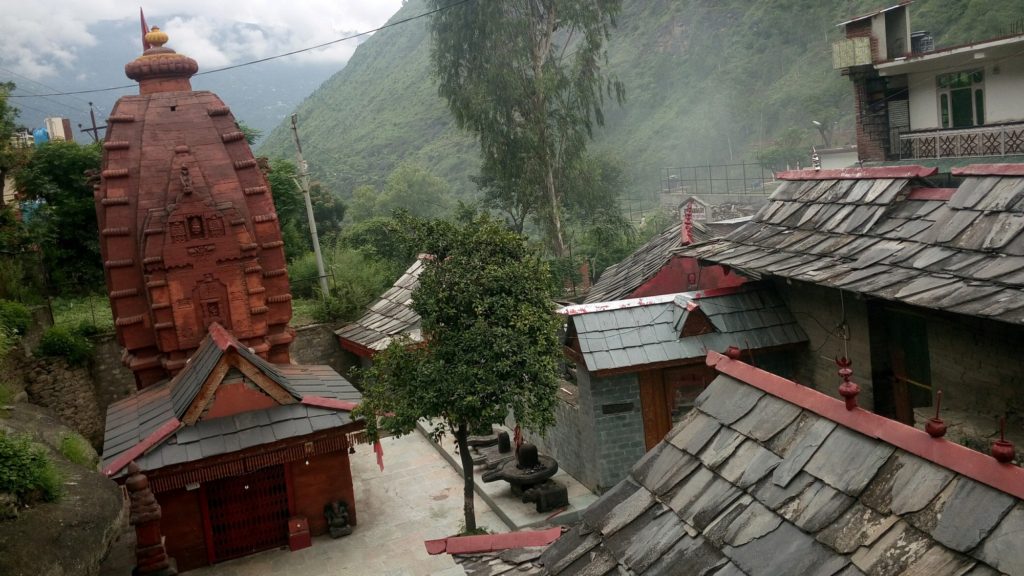
Sun Temple of Sutlej Valley, Nirath
Sun Temple of Nirath. Temples of Himachal …3.
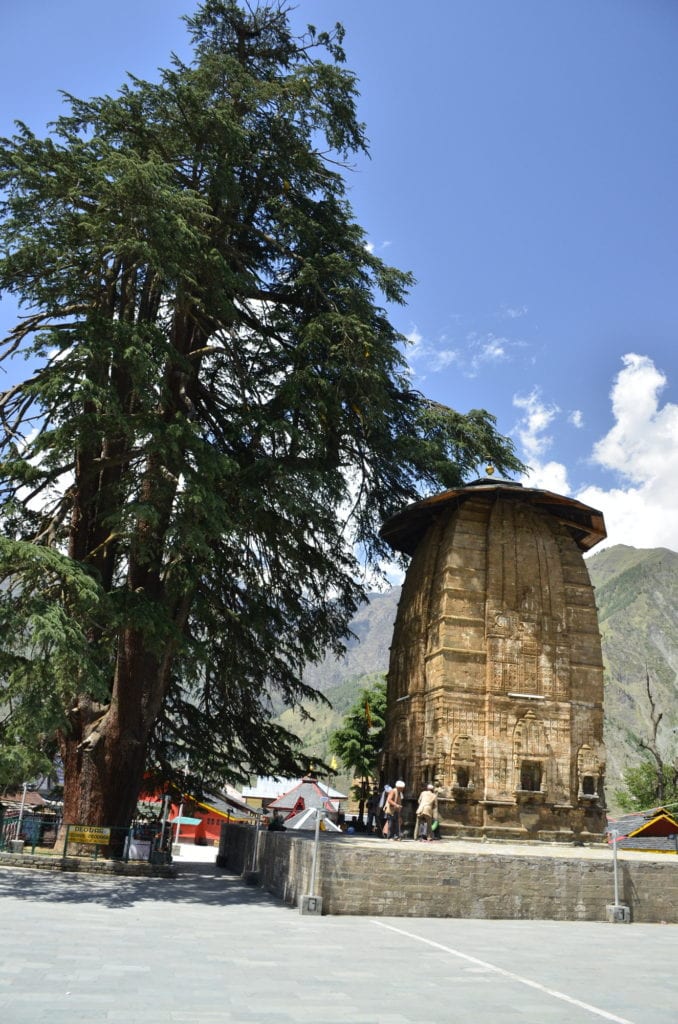
Depending on the source you rely on, there are 2 or 4 or 12 Sun temples in India. Konark takes most of the mind space, deservedly. Nirath along the banks of Sutlej in Himachal hosts one of the small and quaint Sun Temples. I was biking back from Chitkul, which is marketed as the last village in Indian territory. I know a 80 year old lady who has incredible travel spirit and she suggested stopping by Nirath. So, I went.
The town is a sliver of settlements between the Hindustan-Tibet (yes) highway and the Sutlej river. The temple is tucked away and you would miss it if you just stick to the highway. It has its own Goshala and a tiny grazing ground and in fact, a calf was lounging by the dining area when I paid a visit.
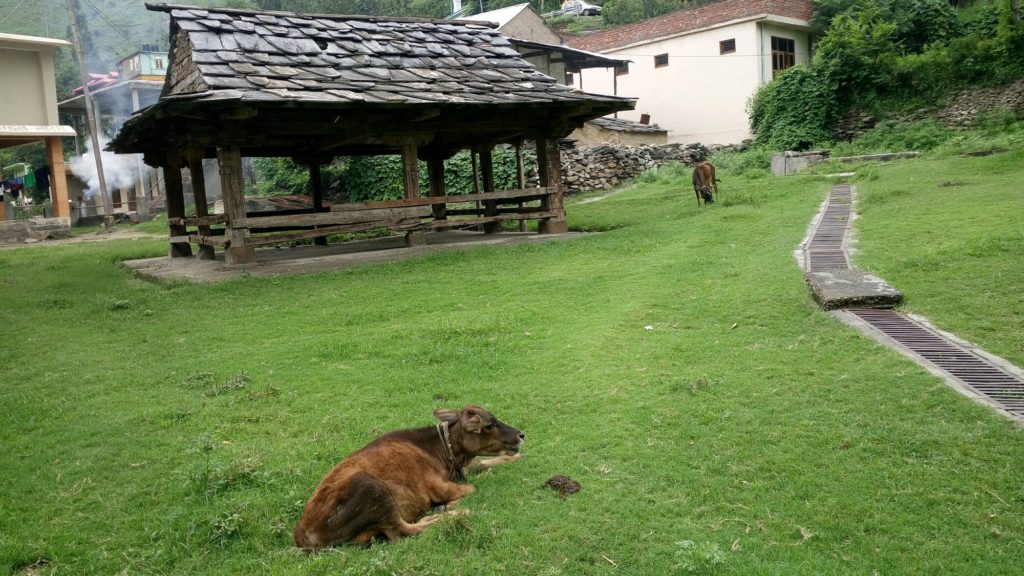
The cow at its dining grounds at Nirath
It was almost noon and there was no one around. The temple was locked, but there was a way to jump in. By the time I was ready to leave, someone came and opened the gate, and pointed out a mobile number scratched on the wall — a contact for the Pandit.
Nirath is small but the journey has its own rewards. Two hours from Shimla and the road drops by 7000 feet to reach the Sutlej valley, a spectacular drive by itself. In and around Nirath, you can see the magic that the Sutlej weaves, especially in monsoons. The drive is also along the apple country that eventually leads to Kinnaur.
Sun temple, Sutlej and apples… Nirath.
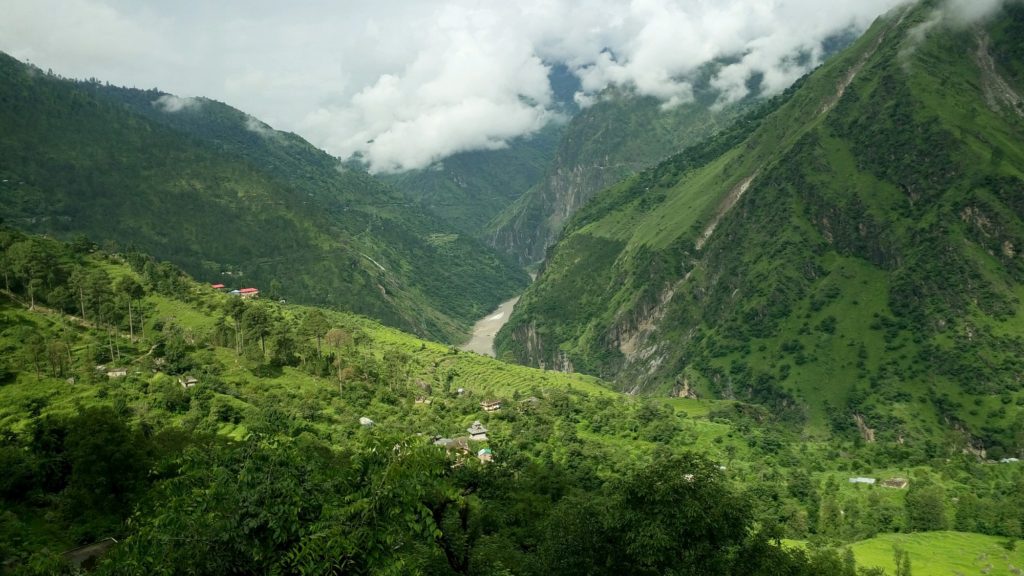
Sutlej, like a ribbon, near Nirath
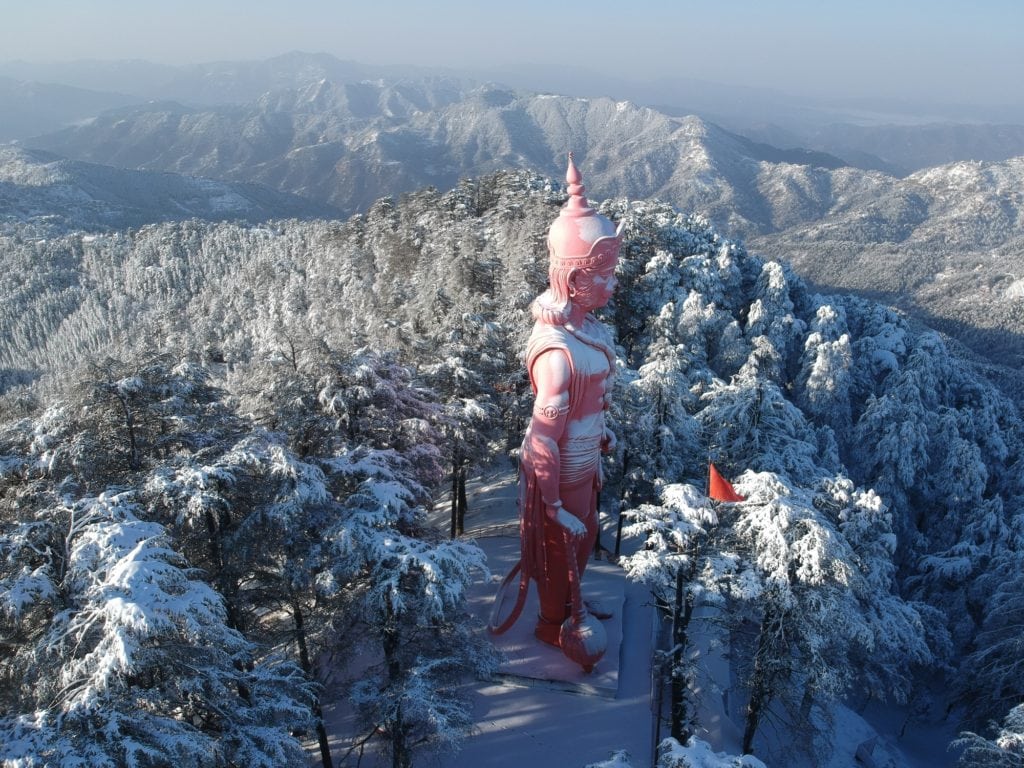
Hanumanji at hilltop, Shimla
I go to the Jakhoo temple every time I visit Shimla. February 2019 was no exception. I had reached Shimla in the evening and it had soon started to snow. It was a gentle drift which became heavier in the night. I set out very early the next morning to the temple, maybe at 5.30 or 6 a.m. The snowfall had covered the town through the night. The landscape was completely white. The town was still asleep, perhaps saying “Life would anyway be slow, so why rush the morning?” With all the silence, the walk through the soft and sinking snow felt even quieter.
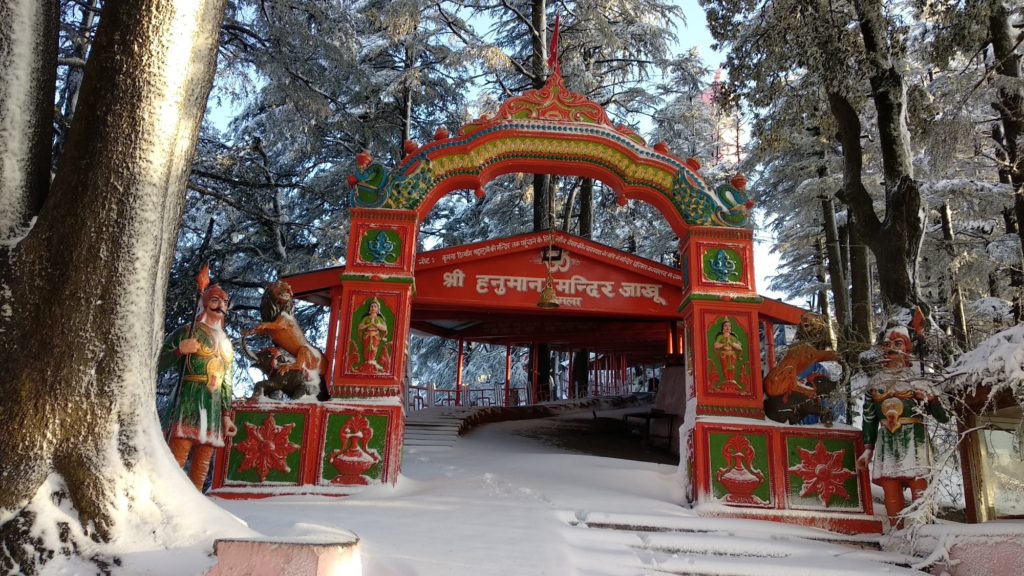
Last flight of steps before Jakhoo temple in Shimla
There was a bit of mystery ahead. In normal weather, the steep climb to Jakhoo takes just over thirty minutes. It snows heavier near Jakhoo and I was not sure if the route was even open. With legs sinking in calf deep snow, I was making only slow progress, but cheerful progress. The route was open but there were no other footmarks on the snow. The snowfall had been heavier near Jakhoo and my feet sank almost knee deep. When I reached Jakhoo I was the only devotee.
In warmer times, the climb itself is an experience. A small board just behind the public library at the ridge challenges you right at the start. It tells you how long you ought to take (age and fitness adjusted!). It is a steep climb for a third of the way winding past a café run by prisoners, some hotels, shops, a Church in disuse and some colonial bungalows. It levels out for the next one third of the way along a large playground and a row of houses. The last one-third is a steep climb on steps. This part is thickly wooded and full of aggressive monkeys. There is a somewhat inconvenient and slightly expensive rope-way. There is also a long winded road that takes you through all of Shimla’s traffic. You can avoid the climb with either of these, but you should climb for the experience and the memories.
The temple is at the top of the ridge and is the highest point in Shimla. It marks the place where Hanumanji heard Sage Yakoo’s chanting and stopped, before resuming his search for Sanjeevini. The temple complex has a 108 feet tall Hanumanji who looks down at the mall road and Shimla ridge below. The sunrise and the sunset are fabulous at Jakhoo. The slanting rays break through the tree leaves to light up the saffron coloured temple walls from different angles. The shadow of the trees adds to the effect. The evening aarti is great community experience.
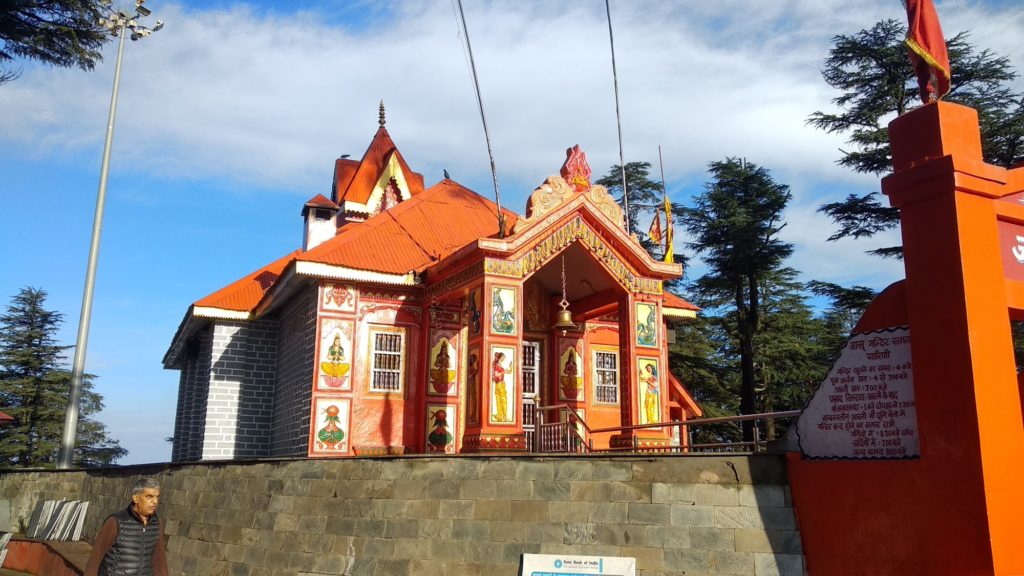
Sunrise at Jakhoo temple

Jakhoo at Sunset
The Panditji is of a ripe age and perhaps lives at the ridge itself and must have served Hanumanji for several decades. He serves the devotees tirtha, some prasad, a flower or two and then caringly applies the tika. He picks up every rupee offered to him and puts them in the hundi. Even if it was intended for him, he takes nothing of it for himself.
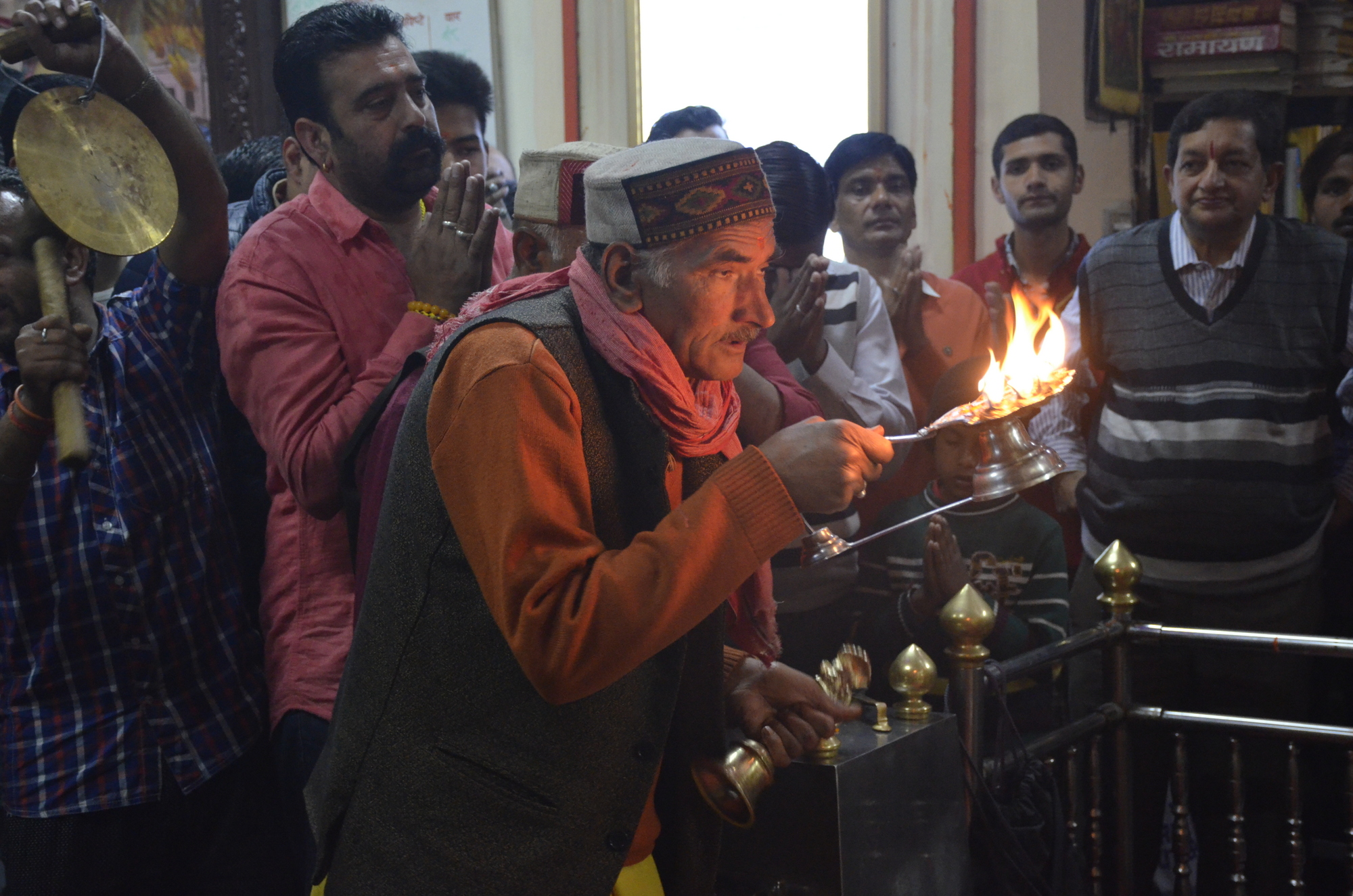
Evening Aarti
I had taken my drone along that morning. With freezing and numb fingers I managed to fly the drone for a few minutes. The drone’s eye view of Hanumanji standing amidst the blanket of snow was incredible. But the temperature took its toll. My thin gloves could not stop the cold that quickly turned into searing pain. I rushed down hoping for warmth. Luckily, ten minutes down, where the trail levels a bit to meet settlements, a tea stall was stirring to life. The owner looked at me and lit up a fire. Then brought me a cup of tea. Life came back. I have gone back twice since then for a warmer experience.
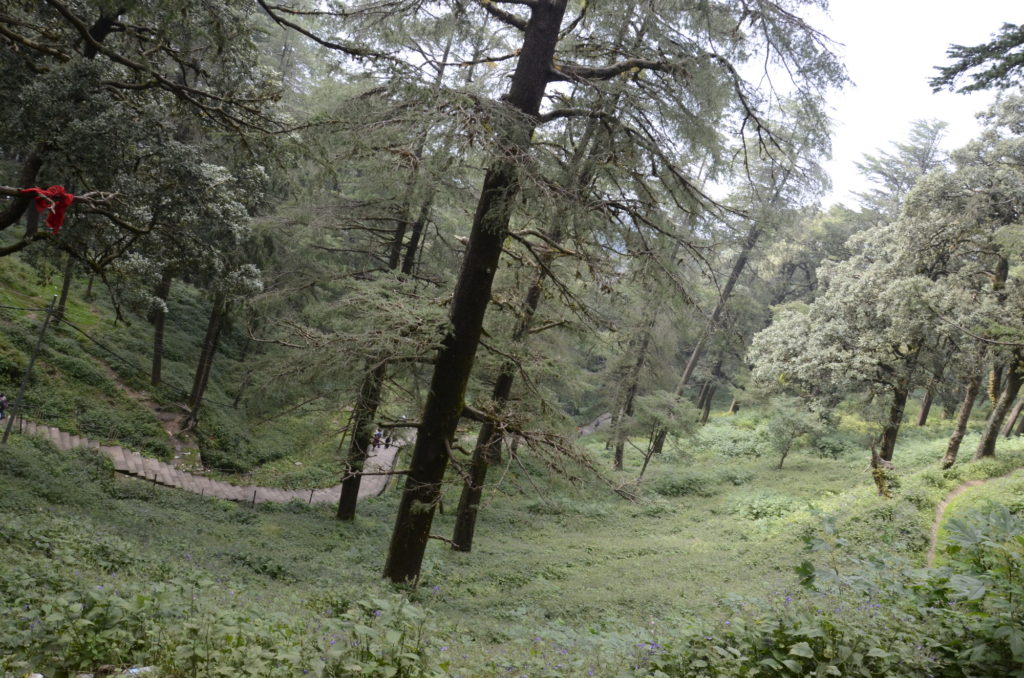
The climb to Jakhoo
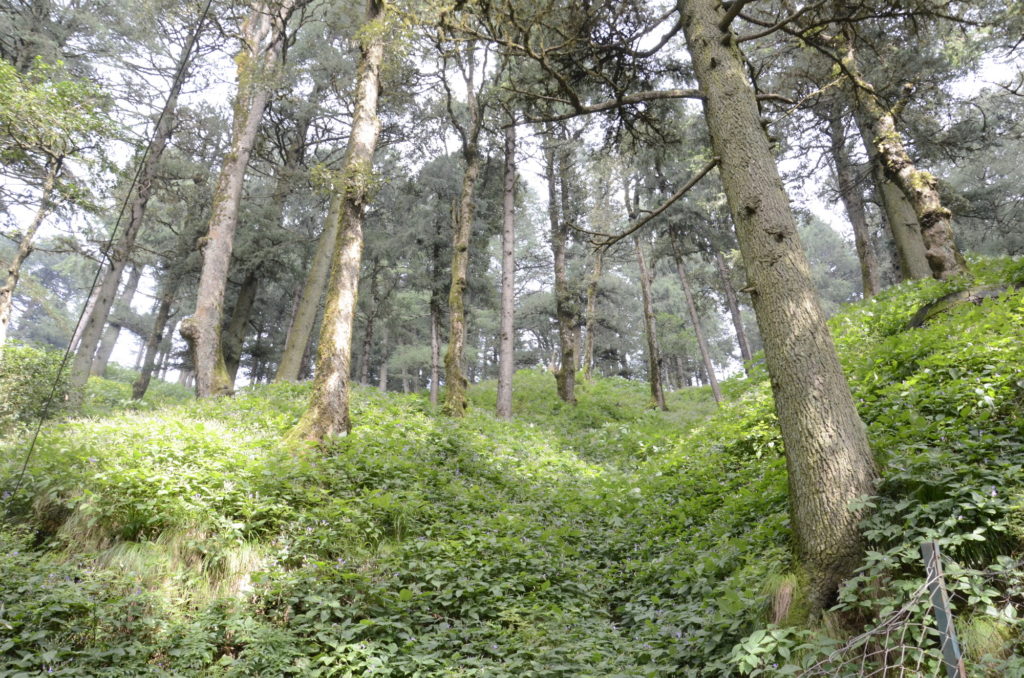
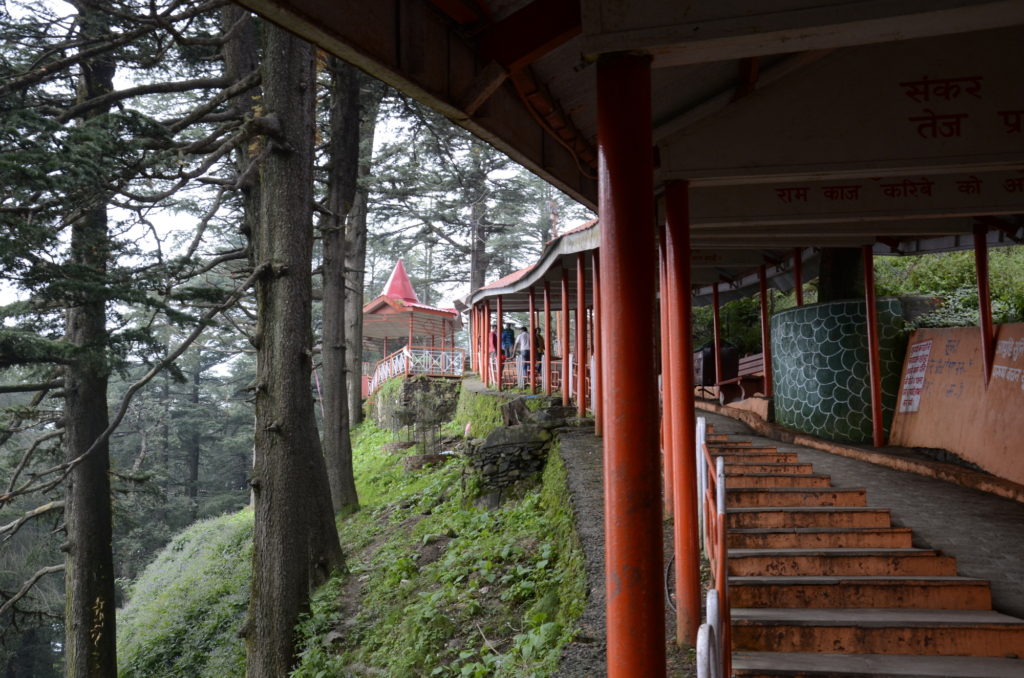
This last climb is a monkey kingdom